What is science? - A short history of science philosophy
Motivation
In this chapter, we begin with the philosophical exploration of science and the scientific process.
Such an exploration is crucial for anyone actively engaged in scientific research to gain a comprehensive understanding of the history, core principles, and fundamental approaches of scientific inquiry.
Understanding the history of science and the philosophy of science provides valuable insights into the traditions shaping our work, the limitations within those traditions, and, importantly, a perspective on the future. This allows us to identify what may be missing in current scientific practices and how we can further develop and refine these practices.
This chapter provides a brief overview of the history of the philosophy of science and the development of the scientific method.
The philosophy of science is a specialized branch of philosophy and is rooted in general philosophy. Philosophy of science itself forms the foundation of the scientific method and the various scientific disciplines that employ it (Figure 1).

1 An interesting account that the idea of a universe of indivisible particles formulated by pre-Socratic philosophers resonates with modern physics of quantum gravity is described in Rovelli (2016).
When discussing the history of the philosophy of science, it is essential to understand that any philosophical or technical innovations should be viewed within the context of the period in which they emerged. Many insights from ancient philosophers may seem trivial to us today. In earlier times, knowledge about nature was primarily acquired through observation and reasoning rather than through experiments or technical tools. As a result, hypotheses from that period were often simplistic and, by today’s standards, may seem somewhat absurd or esoteric..1
For example, it was widely believed that the universe consisted of four elements: earth, water, air, and fire. The complexity of matter was thought to result from various mixtures of these four fundamental elements. This worldview became prominent in pre-Hellenistic philosophy (600-400 BCE) and persisted in various forms until the end of the medieval period in Western natural philosophy. Additionally, similar elemental worldviews emerged in diverse cultures around the world.
A second important point is that many writings from ancient thinkers were either lost or never recorded, especially in non-European cultures. As a result, the knowledge, insights, and philosophical ideas of ancient philosophers are subject to survivorship bias, potentially giving us a skewed view of the depth and diversity of thought in classical Greece and neighboring regions.2
2 For example, it is known that Aristotle wrote 150 treatises, of which only 30 survived.
This chapter will offer a very simplified overview of the history of science and the philosophy of science. We will focus on key concepts, key figures (mainly European men), and events that are most relevant to the overall theme of this course.
You should understand why there is a branch of philosophy called ‘philosophy of science’ or ‘natural philosophy’.
It tries to investigate the approach that are the foundation of our interaction with nature: What can we learn about nature such that these learned insights can be called “scientific”? And: what does “scientific” mean in this context?
Learning goals
- Understand how the key components of the scientific method are grounded in the history of scientific practice and of the philosophy of science
- Have a basic understanding of the relationship between deductive and inductive inference
- Know the key concepts and terms of the history of science and the scientific method.
Classical period
The beginning of Western philosophy of science is commonly attributed to Aristotle. There were numerous philosophers who thought about natural phenomena, but Aristotle was the first to develop philosophical approaches for discovering truth, forming the foundation of the modern scientific method.
Aristotle
Aristotle was an eminent philosopher in ancient Greece. He was a student of Plato, who was himself a student of Socrates. Aristotle later became the teacher of Alexander the Great.
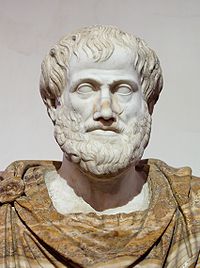
He founded a school of philosophy called the Lyceum. One of his major contributions to the philosophy of science is the invention of the correspondence theory of truth:
- A statement is true if it corresponds with reality; otherwise, it is false.
- The real question, however, is: How can we determine whether a particular statement is true or false?
We will discuss the correspondence theory in greater detail in the context of the scientific method (See section on truth).
Aristotle further defined knowledge as justified true belief, obtained through a rational method of inquiry. Truth is the outcome of a sound method. Aristotle’s view was primarily deductive. Accordingly, he began with axioms.3 From these axioms, he derived truths. The model field of inquiry during the classical period was geometry, which held great importance for many people at that time. Observations were also essential for making inductive generalizations from data.
3 An axiom is a premise that serves as a starting point for reasoning and does not require justification because it is self-evident.
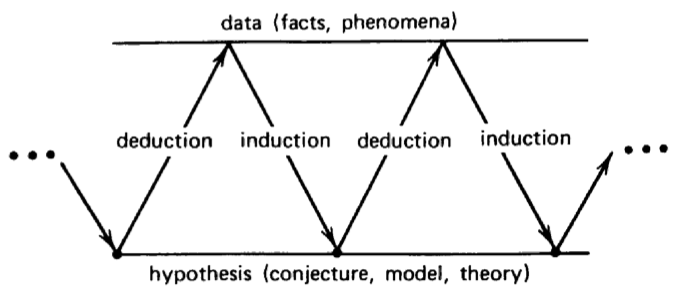
Aristotle’s scientific method was iterative, an inductive-deductive method:
- Inductions from observations to establish general principles.
- Deductions from these principles to test against further observations.
- Additional cycles to advance knowledge.
Thus, it was an iterative method, alternating between deduction and induction (Figure 3).
In classical times, science, which at that time was called ‘natural philosophy’, was grounded in Aristotle’s philosophy. One criticism of the philosophy of science of Aristotle was the reliance on observation because our sense may deceive us.
The influence of the other schools on naturalistic philosophy waned and and waxed over time. Aristotle’s philosophy was rediscovered in the late medieval period when universities were founded. Subsequently, the development of the scientific method flourished as described below.
In addition to the above contribution, Aristotle also made important other contributions to science philosophy. He claimed that the physical world is real (in contrast to the philosophy of ideas by Plato). He also improved deductive logic.
There were two major problems with Aristotle’s philosophy. First, there was a confusion about the integration and relative influence of philosophical presuppositions, empirical evidence and deductive and inductive logic. Presuppositions are assumptions that are made in the development of a philosophical theory. They may reflect one’s beliefs, biases or the current knowledge of the time, but may also include assumptions or statements that turn later out to be false.
Another limitation of Artistotle’s philosophy was that he had no interest in experimental manipulation of nature in the form of experiments. As a consequence, the theoretical development of experimental science was delayed by one and a half thousand years. The reason for the disinterest in experiments was that it was considered unworthy of a philosopher to get his hands dirty with experiments.
Medieval scholars
The thirteenth century was crucial for the development of the modern scientific method as new ideas on how to conduct research emerged. These ideas were introduced by scholars working at the newly established European universities. The first university was founded in Bologna, Italy in 1088, followed by the university of Paris from c. 1150-1170.4 As a result, the scientific method we use today was developed between 1200 and 1600. The most important contribution of these philosophers was to reexamine the question of truth and to provide scientists with a practical, public method to reveal truths about the physical world.
4 See Wikipedia entry on the history of European universities: Link
Different philosophers contributed various aspects to addressing this question, each with a different focus. One goal was to overcome the limitations of Aristotelian philosophy, which derived its certainty through deduction using ideas from logic and mathematics, rather than from principles rooted in physics. The scholars aimed to discover how a rational person could use their natural intellectual abilities to obtain true knowledge by exercising their innate reasoning skills.
The following highlights some of the key figures in the development of the scientific method.
Henry of Ghent (c. 1217 – 29 June 1293; Flemish ;Flanders in Belgium) was pessimistic about the ability to find truth in the natural world, as he held very high standards for what constitutes truth:
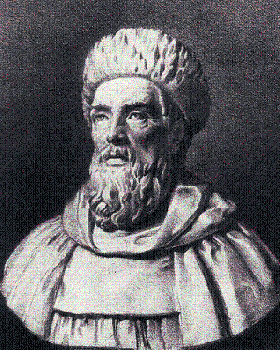
- Truth must be certain, excluding all deception and doubt.
- It must relate to a necessary object.
- It must be produced by a cause that is evident to the intellect.
- It must be applied to the object through syllogistic reasoning.
In his view, these high standards could not be met by natural science.
In conctrast to this pessimistic view, more optimistic scholars developed five significant new ideas:
- The development and use of experimental methods.
- Extensions of deductive and inductive logic.
- Criteria for selecting a theory.
- Competent handling of the presuppositions of science.
- A conception of scientific truth that is broader, more fitting, and more attainable than Aristotle’s stringent definition of scientia.
These five concepts will be discussed in the following.
Development of experimental methods
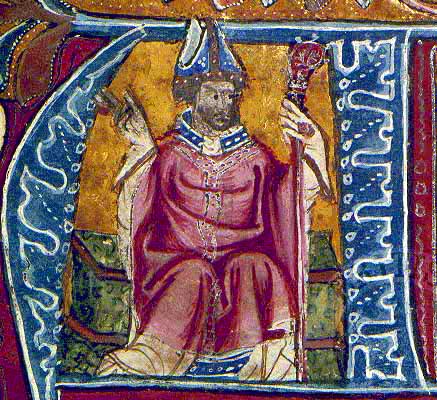
The central figure in the development of empirical methods was Robert Grosseteste (c.1168-70 to 8 or 9 October 1253; English). He advocated moving away from presuppositions and currently authorities such as Aristotle towards:
- Empirical evidence
- Controlled experiments
- Mathematical descriptions
5 For a critical review of Grosseteste’s contribution to the scientific method, see http://plato.stanford.edu/entries/grosseteste/#SciMet
Furthermore, he stated that methods precede results, and philosophy of science precedes science. In other words, thinking critically about science is required before engaging in scientific work.5
Roger Bacon (c.1219/20 to c.1292; English) later brought these ideas to Paris, which influenced scientists through the 17th century. He expressed the concepts of the new experimental science in three requirements:
- Conclusions reached by induction should undergo further experimental testing.
- Experimental facts have priority over presuppositions or reasoning and can expand the factual basis of science.
- Scientific research should extend to entirely new problems, which may also hold practical value. For example, Bacon studied optics.
Extended inductive and deductive logic
In the Medieval, many scholars extended the theory of inductive and deductive logic to better deal with empirical data. As a consequence a stronger logic, combined with data from experiments on both manipulated and unmanipulated objects, allowed new rigor and strength in theory selection.
Methods for theory choice
Theories must fit data and observations, but if there are several theories available to seem to equally well explain observations, additional criteria for theory choice became essential.
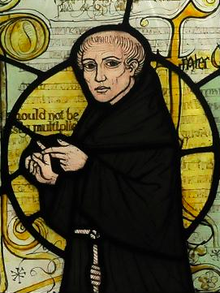
One such criterion is the principle of parsimony, introduced by William of Ockham (c. 1287 – 10 April 1347; English). Often called “Ockham’s razor,” this principle states: if given a choice between two theories that equally explain the data, choose the one that requires fewer assumptions. This principle has guided scientific inferences and has been formally incorporated into scientific methods.
For instance, Gregor Mendel studied the inheritance of seven traits in peas by crossbreeding plants with different trait expressions (e.g., yellow versus green pea color). After two generations, Mendel observed that phenotypic traits in the offspring consistently displayed a ratio close to 3:1. Based on thousands of observations, he inferred a simple mechanism underlying inheritance, which he termed the “law of equal segregation,” referring to the consistent distribution of parental alleles across generations.
Another application of the principle of parsimony is in phylogenetics. One method to construct phylogenetic trees from DNA or protein sequences evaluates numerous possible trees for a group of species, then selects the tree requiring the fewest (“most parsimonious”) mutations.6
6 Wikipedia entry on the Maximum Parsimony method: Link
Seeing is believing?
If one accepts that science is grounded in common sense, one may accept that seeing someone sitting represents the trugh. Therefore seeing is believing.
The philosopherAlbertus Magnus (c.1200 - 15 November 1280; German) worked on the fundamental assumption of science: “Seeing is believing” and therefore base science on the common sense. He realized that the connection between perception and truth was not self-evident because this assumption could be questioned by philosophical and theological concerns. It was possible, he speculated, that impressions in the brain might come directly from God, without any physical impression or process.
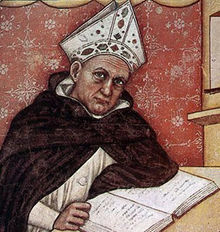
The central contribution of Albertus Magnus was, therefore, to show that science cannot operate without presuppositions. This reflection on presuppositions is also known as suppositional reasoning. Albertus Magnus argued that God created both humans and the world. Therefore, humans are equipped to understand the world around them, making the world open to scientific investigation. This view had a profound influence on scientific development in universities within Western Christianity. Scientists would agree that with the common-sense presupposition, the world is intelligible. Suppositional reasoning (i.e., reflection on presuppositions) became the tool to think about natural philosophy (i.e., science) or theology. A consequence, however, is that if we accept that science is based in common sense and we reason about the suppositions, science becomes free (i.e., intellectually independent) of preconcieved world views and theological considerations.

A summary of medieval philosophy of science
The medieval philosophers of science developed a conception of scientific truth that is broader and more comprehensive than the narrow view of scientia by Aristotle. For example, Ockham differentiated between two different types of sciences. The first is a scientia realis, which is the science of the real entities that whose investigation is based on experience. The second is a scientia rationalis, which describes concepts and is based on logical principles. Furthmore, the scientia of Aristoteles scientia was mostly qualitative, whereas Grosseteste and others developed and used quantitative and scientific methods for scientific inquiry. Furthermore, the adoption of arabic numerals by the universities in 1250 led to the extension of calculations. It was also realized, for example by Roger Bacon that science was not only of philosophical interest but led to practical benefits.
The most important step in medieval philosophy of science, however, was the use of experiments with manipulated objects to test hypotheses. By this, science became separated from theology and philosophy and subsequently achieved intellectual and institutional independence.
To conclude, the 13th century was important for the development of the scientific method. It started with a method lacking experiments and an approach; it ended with an essentially complete scientific method, because of the contributions of Robert Grosseteste in Oxford, Albertus Magnus at Paris and other medieval scholars.
Modern scholars
The evolution of empirical science
The modern age began with the discovery of America in 1492 and is characterized by additional important developments in science. An important trend was the development of powerful scientific instruments. Examples of such instruments include:
- The observatory by Tyho Brahe (1546 - 1601)
- The telescope and thermometer by Galileo Galilei (1546 - 1642)
- The barometer and a calculating machine by Blaise Pascal (1623 - 1662)
In addition, there was a rapid development of mathematics such as
- Probability theory and elementary statistics by Blaise Pascal, Pierre de Fermat, Jacob Bernoulli and Thomas Bayes
- Calculus was invented by Isaac Newton and Gottfried Wilhelm Leibniz
- Non-euclidean geometry was developed by Thomas Reid. He showed that Euclid’s classical axioms are not self-evident.
These developments led to various applications of science in solving practical problems. Hence, the philosopher Francis Bacon, who is often considered as the father of the experimental science because of his strong emphasis of empirical science, stated that “knowledge is power”.
The physicist Isaac Newton provided the following contributions:
- He extended his inquiries into unobservable objects and entities. E. g. he asked which particles determine the hardness of observable objects?
- He trusted induction.
- Knowledge exists even in the absence of a deep explanation. An example is his law of universal gravitation: \[F=G\frac{m_1m_2}{r^2}\]
We know the nature of gravity but not the cause.
The resurgence of scepticism
The translation of the work of the ancient philosopher Sextus led to a rediscovery of Greek Skepticism, which stated that objective knowledge is not possible. Philosophers like Descartes, John Locke David Hume and Kant had to struggle again with skepticism as philosophers had in classical times. The main thesis of Sextus was that neither reason more sense perception guarantee scientific truths. Philosophers responded differently to this:
René Descartes (1596-1650) stood for rationalism, expressed in his famous statement: “Cogito ergo sum”. This approach was to begin with general philosophical principles and then to deduce details of expected data. For this, a set of undoubtedly general principles were necessary. Descartes used doubt as a general principle and rejected the unverified assumptions of the ancient philosophers. Descartes started with “Cogito, ergo sum”, establish the existence of a god. His god was a good god and therefore allowed humans to perceive the world without deception.
In summary, he emphasized that philosophical reasoning is the best approach to truth. Empirical evidence may not be reliable enough and induction may be risky and likely incorrect.
Francis Bacon (1561-1626) came from the opposite direction. He was an empiricist and started by collecting data and from them he derived general principles.
Below is a student-friendly, clearer version of your lecture notes. I keep the content accurate but make the explanations more accessible and easier to follow.
David Hume (1711–1776) was a Scottish philosopher and one of the most influential thinkers in the history of science. His ideas later inspired the logical positivists of the 20th century. Hume’s starting point was always human understanding: How our minds work and what their limits are.
A core element of Hume’s thought is his empiricist theory of meaning: Only statements that can be traced back to experience — our senses or the ideas that come from them — are meaningful. For Hume, the important question was not what physical objects really are, but how we perceive them.
To illustrate this, Hume argued that the everyday sentence “I see a tree” is philosophically misleading. It combines a mental perception (“I see”) with an external object (“a tree”). Hume suggested that the more accurate description is: “I am being appeared to treely.” This phrasing stresses that all we ever have direct access to are our perceptions, not the objects themselves.
From this starting point, Hume drew several radical conclusions:
- The concept of cause and effect has no basis in experience; therefore, it is not strictly meaningful.
- Induction, defined as drawing general rules from repeated observations, has no logical justification.
- Scientific explanations are therefore uncertain and, strictly speaking, speculative.
- Science cannot establish a secure connection between what goes on in our minds and what exists in the external world.
This raises the question whether Hume was a radical sceptic. To understand this question, it helps to compare Hume with Isaac Newton, whom Hume greatly admired.
Newtonian scientists take a common-sense view: they assume that their observations reliably correspond to real objects (“I see a tree” means there is a tree). Hume’s scientist, by contrast, is a post-sceptical philosopher who recognises that all we ever directly know are our mental perceptions, not the external objects themselves.
So while Newton trusted observation, Hume insisted that observation only gives us perceptions, and we cannot logically prove that these perceptions match the external world. Despite this scepticism, Hume deeply influenced later thinking on induction, helping shape major debates in the philosophy of science.
The 20th century
The 20th century transformed the way scientists and philosophers understood science itself. Questions such as “What makes science scientific?”, “How do theories change?”, and “Can we ever know truth?” became central to philosophical inquiry. This period saw the rise of logical positivism, the critique of falsificationism, and the emergence of paradigms and pluralism as key ideas about how science works.
For researchers in crop science and related fields, understanding these developments helps place our methods and assumptions into a broader intellectual context. Each scientific approach, in the field of plant breeding for example they range from classical breeding to genomic prediction, reflects not only technical choices but also philosophical commitments about what counts as evidence, explanation, and progress.
The Vienna Circle and Logical Positivism
In the 1920s and 1930s, a group of philosophers and scientists known as the Vienna Circle sought to establish a unified and rigorous foundation for all scientific knowledge. Key figures included Moritz Schlick, Rudolf Carnap, and Otto Neurath. They believed that philosophy should serve as the logical analysis of scientific language, and that the only meaningful statements are those that can be either verified by observation or are logically true.
This approach, called logical positivism or logical empiricism, aimed to eliminate metaphysics and subjectivity from science. The Vienna Circle’s emphasis on verification and quantification deeply influenced early 20th-century scientific practice, including developments in biometrics and quantitative genetics, where measurable and reproducible observations became central.
Although logical positivism declined after World War II, its legacy endures in the modern emphasis on operational definitions, reproducibility, and statistical rigor in experimental science.
Karl Popper and Falsificationism
Karl Popper (1902–1994) challenged the central positivist idea of verification. He argued that no number of confirming observations can ever prove a universal statement, such as “all swans are white”, but a single counterexample can falsify it. According to Popper, science advances not by confirming theories but by rigorously attempting to disprove them.
Popper’s philosophy introduced the concept of falsifiability as the criterion for demarcating science from non-science. A scientific theory must make bold predictions that can, in principle, be proven wrong. Theories that resist falsification through testing are provisionally accepted until better ones appear.
In crop science, Popper’s approach translates into testable hypotheses and reproducible experimental designs. For instance, a claim such as “introducing allele X increases drought tolerance in barley” must be framed so that experimental data can refute it. This mindset helps avoid confirmation bias and distinguishes scientific research from speculation or purely ideological claims about agriculture.
Thomas Kuhn and Paradigm Shifts
In 1962, Thomas S. Kuhn revolutionized the philosophy of science with his book The Structure of Scientific Revolutions. Kuhn argued that science does not progress through the steady accumulation of facts but through periods of normal science punctuated by paradigm shifts.
A paradigm is a shared framework of theories, methods, and standards that guide scientific practice within a community. During normal science, researchers solve puzzles within the accepted paradigm. However, when anomalies accumulate that cannot be explained, a crisis emerges, leading to a scientific revolution. A new paradigm then replaces the old one, often changing not only theories but also the fundamental questions scientists ask.
Kuhn based his theory mainly on the big discoveries in physics, but in crop science, we could also illustrate Kuhn’s model. The transition from Mendelian genetics to molecular genetics, for example, reflects a shift from a statistical approach to inheritance to a causal mechanistic explanation based on the theory of chromosomes and DNA. This reflects to some degree the transition of Newtonian physics to the modern quantum physics of the 20th century.
Kuhn thus reminds us that what counts as “normal science” is historically and socially situated. However, one criticism of Kuhn’s theory of paradigm shifts is that there are hardly any formal criteria to define what a paradigm shift ist.
Paul Feyerabend and Epistemological Anarchism
Paul Feyerabend (1924–1994) took Kuhn’s insights further by rejecting the idea of a single scientific method altogether. In Against Method (1975), he argued for epistemological anarchism, which expresses the view that there is no universal rule governing scientific progress. Instead, Feyerabend suggested that “anything goes” in the sense that creativity, diversity, and even apparent irrationality have often played crucial roles in advancing science.
He pointed out that many great discoveries in the history of science, such as Galileo’s defense of heliocentrism, succeeded precisely because their proponents broke the methodological rules of their time.
For crop science, the pluralism of Feyerabend encourages openness to multiple knowledge systems, including traditional ecological knowledge and participatory breeding methods used by farmers. His ideas challenge the dominance of reductionist, high-input paradigms and highlight the importance of integrating local and context-specific practices with modern scientific methods. However, one may argue that the latter statement is judgemental and not based on objective criteria that can be validated using a quantitative or falsification approach.
Summary
The philosophical foundation of the scientific method we use today for scientific investigations developed over nearly 2,000 years.
- The initial phase began with Aristotle’s reflections on how to make and interpret observations.
- The second significant phase occurred during the medieval era when European universities were founded. Key components of the modern scientific method, such as empirical investigations and experiments, were established as essential.
- The next phase began during the Renaissance, marked by major advancements in both mathematical and experimental methods and the development of new technologies. This progress helped establish the structure of modern science that we still follow today.
- Throughout this period, there was continuous debate about the role and effectiveness of inductive and deductive reasoning in making statements about nature. Other important topics included the roles of language, common sense, and our senses in learning about the natural world.
Key concepts
Further reading
- The structure of this chapter is based on the chapter “A short history of truth” PDF in the book by Gauch, which is recommended for further reading.
- The Wikipedia entries linked in this chapter.
Study questions
Parsimony principle: Think about the following statements on the parsimony principle:
- If you have several theories to explain an observation, always choose the simplest one
- If you have several theroies to explain an observation, choose the simpler one
- If you have an observation always develop an theory that is as simple as possible to explain it
Which one is correct?
The law of gravity by Newton describes gravity (actually the consequences of gravity) without a deeper understanding of why gravity exists. Identify similar rules, principles and laws from crop science that are sufficiently correct for a certain level of understanding and application, but where a deeper understanding of the underlying causes and mechanisms are missing.
Verification vs. falsification: How might you design a plant-breeding experiment that allows falsification rather than confirmation of a hypothesis? What would a Popperian approach to selecting drought-tolerant lines look like?
Paradigm change: Identify developments in crop science that you would label as key paradigm shifts over the past century. How did the move from Mendelian to molecular genetics, and later to genomics and AI-based breeding, change the assumptions about what counts as valid knowledge?
Pluralism and knowledge systems: In what ways can indigenous agricultural knowledge complement modern breeding science? How can researchers ensure methodological rigor while remaining open to non-Western epistemologies?
Social context of science: How have political and economic factors—such as the Green Revolution, intellectual property rights, or climate policy—shaped what research questions are considered important in crop science?
In class exercises
Discussion questions, Okasha Chapter 1
- What are the key events and developments in the history of science according to Okasha?
- Which of these events result from technical breakthroughs and which mainly from new philosophical concepts?
- Which of these events may have been relevant for the development of agricultural and crop science?
- What is philosophy of science and its role according to Okasha?
- What is Popper’s definition of science vs. pseudoscience, and what is the key problem with his definition?